Ignacio has been a member of the Board of Directors of the Civil Engineers Association of Spain, and member of various committees of the Engineering Institute of Spain (IES), such as the Committee on Energy and Natural Resources, Committee on Engineering and Sustainable Development, and the International Committee.
Committee on Water (CW)
Water is a universal good indispensable for life that affects many sectors, giving this resource a social, environmental, and economic dimension. It is a good that knows no borders. Water also conveys many of the impacts of climate change to society. The UN’s “2030 Agenda” has set Sustainable Development Goal 6 to ensure availability and sustainable management of water and sanitation for all. SDG-6 is interlinked with the entire 2030 agenda, so achieving its targets will make it possible to achieve those of the other goals.
The WFEO Water Committee brings together all engineering disciplines to have a stronger voice on the water scene, to become more relevant in global water decisions and to remind society and politicians of the importance of engineering contribution to achieving the goals and targets of SDG 6, which is interlinked with the entire UN´s Agenda 2030.
Ignacio González-Castelao, Chair of CW / stc-water(at)wfeo.org
The Engineering Institute of Spain (IIE) serves as the host of the Committee on Water from 2024 to 2027.
Vision and Mission
Water security is essential to achieve SDG-6 and resilience to climate change requires that engineering will provide knowledge and technology, leading water governance and its efficient use.
Today, engineering urgently needs to have a stronger voice on the water scene, to remind society and politicians of the importance of its contribution.
WFEO, with the support of the CW, must acquire greater relevance in water global decisions, showing the society the importance of engineering to improve the living conditions of all mankind.
Objectives
Engineers need to provide a strong platform to coordinate the engineering water work around the world and so, WFEO will be able to make a significant contribution to reach the global water goals.
In 2015, 844 million people lacked even a basic water service, 2.1 billion people lacked safely managed drinking water, and 4.5 billion people worldwide lacked a safely managed sanitation service. More than 2 billion people are living in countries experiencing high water stress.
Engineering contributions will be essential to reach this target. Adapting to climate change is making the challenge even more difficult.
Engineers are needed to design and operate dams and reservoirs, channels, pipelines, water treatment plants, and also for planning and managing water resources. New nature-based engineering solutions are emerging to improve rivers, underground aquifers and urban drainage. Safe wastewater re-use and desalination will be needed as well. New irrigation technologies are needed as agriculture demands account for 70% of all water use.
Engineers are also needed to help prepare for floods and droughts to reduce economic losses from natural disasters.
Integrating information technology into water and sanitation systems offers exciting new solutions. Improved tracking of water flow and consumption can provide the improved security needed to attract private investment while still ensuring that reliable services meet basic human needs.

Activities
Water has a well-established international dynamics with publications and recurring appointments (Global Conferences) in which we miss the specific engineering contribution, quite necessary to achieve real and effective goals.
CW activities shall be addressed to to give engineering a stronger voice in the water scene.
Among these activities are:
• Contributions to the SDG 6 and their goals through participation in UN Water Task Force Groups.
SDG 6 includes eight global targets that are universally applicable and aspirational. However, each government must decide how to incorporate them into national planning processes, policies and strategies based on national realities, capacities, levels of development and priorities. They cover the entire water cycle including: provision of drinking water (target 6.1) sanitation and hygiene services (target 6.2), treatment and reuse of wastewater and ambient water quality (target 6.3), water-use efficiency and scarcity (6.4), implement integrated water resources management at all levels, including through transboundary cooperation (target 6.5), protecting and restoring water-related ecosystems (6.6), international cooperation and capacity-building (target 6.A) and participation in water and sanitation management (target 6.B).
• Participation in international forums in which the water policy is conceived.
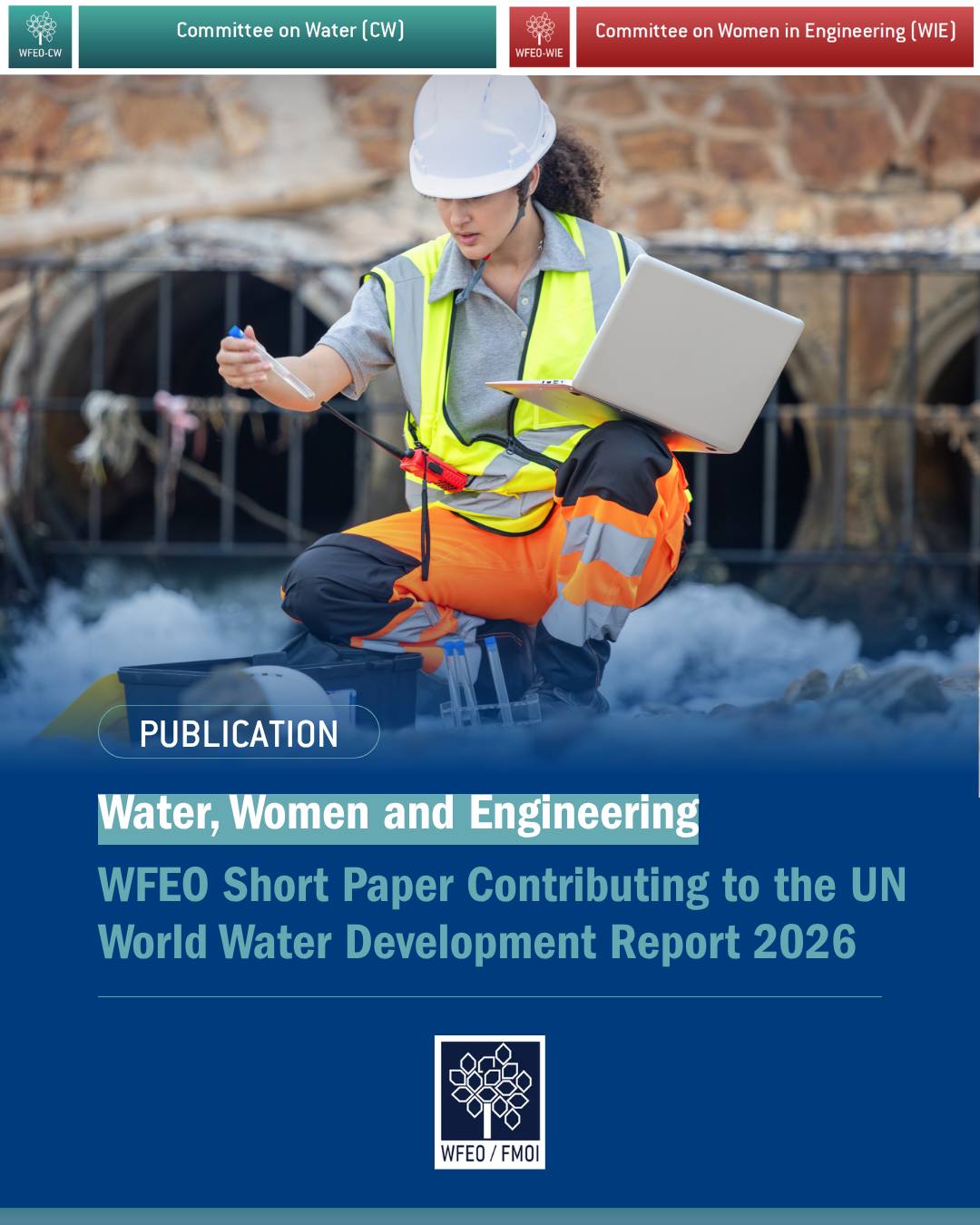
• Preparation of engineering positions and statements typical of engineering and Contribution to global documents of UN Water and their agencies (annual preparation), such as the yearly WWDR – World Water Development Report – .
This involves working on the various documents produced through participation in the corresponding Groups. Associations with specialized global organizations that are considered relevant for work will be established.
These activities will be developed in two ways:
• Collecting and disseminating the activities performed by different members of the WFEO and their professionals.
• Specific initiatives that can agree on the WGW, that require specific works to be developed by experts, which must have specific funding to be carried out.
Ignacio González-Castelao, Chair of CW
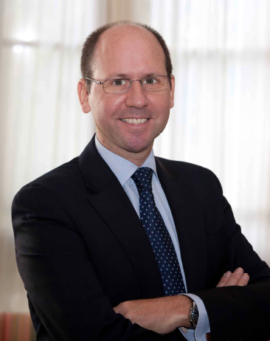
Ignacio González-Castelao Martínez-Peñuela is a dedicated Master Civil Engineer skilled in the water cycle and environmental issues. He has worked in different private and public Spanish engineering organizations, both within the water sector and in the infrastructure of roads and railways. Ignacio has held various positions at Aguas de las Cuencas Mediterráneas S.M.E., S.A., since August 2002. Currently, he is Deputy to CEO.
He is committed to internalization and collaboration with technical communities, multilateral banks, and international organizations to share knowledge and learning.
He is also the representative of the IES at the Pan-American Union of Associations of Engineers (UPADI) and Chair of the Committee on “Water” of the World Federation of Engineering Organizations.
In 2018, he completed his term as Chairman of the Standing Committee on Water of the World Council of Civil Engineers. These efforts to disseminate knowledge and learning have led him to be selected by the Department of State of the United States of America as an International Leadership Visitor and later Secretary-General of the VIA Jefferson Circle Association.
Activities
Members
Members list
| Member | WFEO National Member / Institution | Country / Region |
| Abdoul Rachid Sani Maigochi | Ordre des Ing. G. Civil Niger | Niger |
| Adeyinka Sobowale | Nigerian Society of Engineers | Nigeria |
| Adolfo Guitelman | World Council of Civil Engineers (WCCE) | International |
| Armando Silva (Vice-Chair) | Ordem dos Engenheiros de Portugal | Portugal |
| Aziz Sebaaly | Federation of Lebanese Engineers | Lebanon |
| Bruno Storni | Swiss National Committee for Engineers Europe | Switzerland |
| Custódio Rafale | Ordem dos Engenheiros de Moçambique | Mozambique |
| Dale Jacobson | American Society of Civil Engineers | USA |
| Davor Zderic | European Council of Civil Engineers (ECCE) & Serbian Chamber of Engineers | International |
| Feras Althunuyan | Saudi Council of Engineers | Saudi Arabia |
| Geremew Sahilu | Ethiopian Association of Civil Engineer | Ethiopia |
| Goran Jeftenic | Serbian Chamber of Engineers | Serbia |
| Hemant Omkarrao Thakare | Institution of Engineers India | India |
| Hillary Kipkirui Ngenoh | Institution of Engineers of Kenya | Kenya |
| HUANG Jinhui | China Association for Science and Technology | China |
| Hung-Pu Huang | Chinese Institute of Engineers | Chinese Taipei |
| Ignacio Gonzalez-Castelao (Chair) | Instituto de la Ingeniería de España | Spain |
| José Manuel Sousa | Ordem dos Engenheiros Tecnicos de Portugal | Portugal |
| Juan Carlos Santamarta | Instituto de la Ingeniería de España | Spain |
| Lassad Jlidi | Tunisian Engineers Order | Tunisia |
| Lau Nga Hong | Macau Institute Of Engineers | Macau, SAR of China |
| Lélia Ferreira | Ordem dos Engenheiros Tecnicos | Portugal |
| Leonard Kassana | Institution of Engineers Rwanda | Rwanda |
| Lourenço Neto | Ordem of Engineers of Angola | Angola |
| Lylian Coelho Ferreira | Ingénieurs et Scientifiques de France | France |
| Mahamadou-Bachir Altine | Ordre des Ing. G. Civil Niger | Niger |
| MAK Ka Wai | Hong Kong Institution of Engineers | Hong Kong, SAR of China |
| Manatsawee Nawik | Council of Engineers Thailand | Thailand |
| Milica Kalezić Popović | Engineers Chamber of Montenegro | Montenegro |
| Mohamed Meksi | Tunisian Engineers Order | Tunisia |
| Ng Ka Man (Mann) | Macau Institute Of Engineers | Macau, SAR of China |
| Paul W Jowitt | Institution of Civil Engineers UK | UK |
| Pedro Volante | Ordem of Engineers of Angola | Angola |
| PENG Jing | China Association for Science and Technology | China |
| Saud Alharbi | Saudi Council of Engineers | Saudi Arabia |
| Steve Adamthwaite | Engineers Australia | Australia |
| Tomas Sancho | Instituto de la Ingeniería de España | Spain |
| U Khin Maung Htaey | Myanmar Engineering Society | Myanmar |
| Victor Javier Cuevas Mejia | Colegio de Ingenieros Civiles de Honduras | Honduras |
| Victor Smith | Engineering Society of Liberia | Liberia |