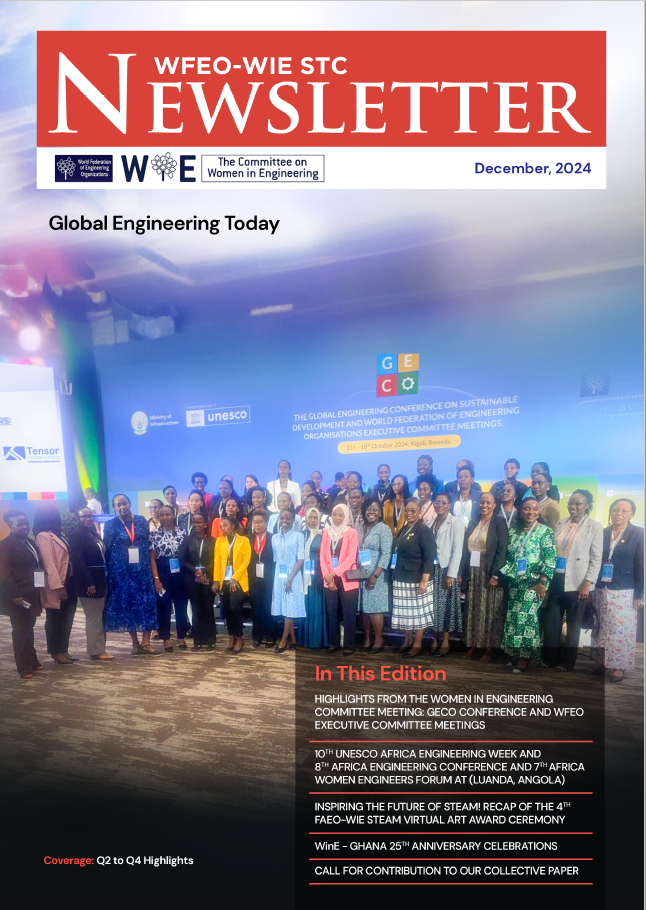
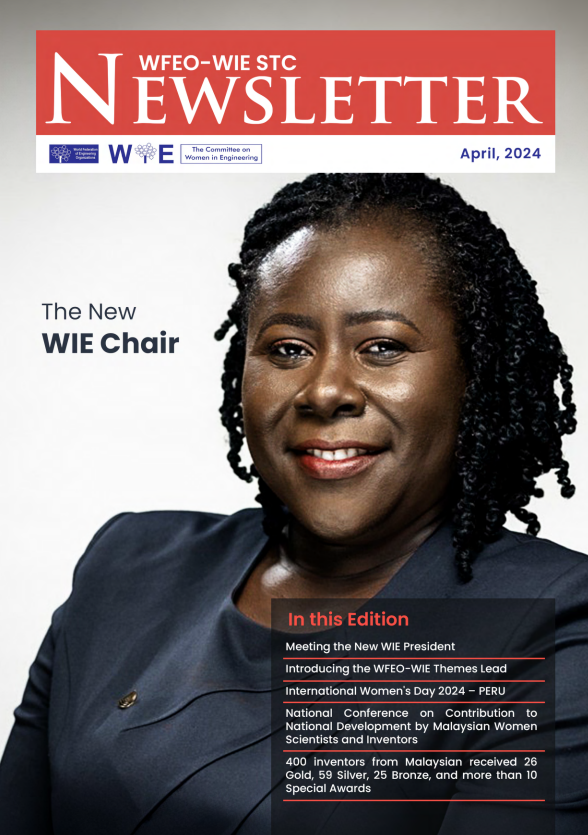
Committee on Women in Engineering (WIE)

Women in Engineering (WIE) is a Standing Committee of the World Federation of Engineering Organizations with the purpose of Empowering Women in Engineering and Technology.

WIE is dedicated to fostering diversity and inclusion in engineering. It collaborates with WFEO members to empower women and under-represented groups through innovation and technology, supporting sustainable development and ensuring equitable participation across the profession, with a focus on leaving no one behind.

The Ghana Institution of Engineering (GhIE) serves as the host of the Committee on Women in Engineering from 2024 to 2027.


Background

The Ghana Institution of Engineering is a national member of WFEO and has been an active participant in all activities of the WFEO. GhIE members have served as members on various Standing Technical Committees of the organization and have representatives from Women in Engineering Ghana fully participating in the successes of the committee’s activities, as well the achievements of the WFEO-WIE.


Vision


To promote equality, diversity, and inclusivity in the engineering workforce (with a focus on women).


Mission


To harness the collaborative power of the group to attract, retain, and promote the cause of females and other under-represented groups using innovation and technology to achieve a sustainable world, that leaves no one behind.


External Objectives


  • To create awareness of the importance of the Sustainable Development Goals, especially SDG 5 and how it is pivotal to the success of the other goals.
  • To support outreach activities, capacity building, training, and empowerment of women to attain leadership positions in engineering.
  • To promote and measure gender disaggregated engineering metrics, the results of which can be used to advise policies on equality, diversity and inclusivity in the profession and measure progress.
  • To collaboratively empower, inspire, encourage, and share the achievements of women in engineering and technology around the world.
  • To collaboratively celebrate World Engineering Day and other events throughout the year (such as International Women’s Day and International Women in Engineering Day) through our own activities and those of our members.


Internal Objectives


  • To encourage women to join in other committees of WFEO and aspire to leadership positions.
  • To communicate the work of WFEO and WIE to their own professional engineering organisations.
  • To collaborate with other Standing Technical Committees and Policy Implementation Committees to conduct webinars, events and progress the other goals and objectives of WFEO.
  • To encourage greater diversity and inclusivity in WFEO.
  • To report progress on an annual basis.

Themes

The Women in Engineering Committee has four overarching themes.


These themes are being addressed in partnership with our National Member Organizations, other WFEO standing committees, through our collaboration with WFEO partners and other associated organizations including INWES (International Network of Women Engineers and Scientists), United Nations Women, United Nations Educational Scientific and Cultural Organization (UNESCO), International Energy Association, International Science Council etc.

Many reports worldwide indicate that the engineering sector is currently experiencing a huge skills gap, which continues to widen yearly. The rapid emergence of digitization and innovation has further underscored the new requirements needed in the workplace, and the lack of available talent to fill those gaps.

The WiE is committed to capacity building programs which will:


  • Attract a diverse future generation;
  • Champion the reduction of the gender digital divide;
  • Work with partners, provide guidance on creating and maintaining inclusive cultures;
  • Create opportunities for employers to drive strategy;
  • Extend the focus of our diversity and inclusion activity beyond gender to other underrepresented groups and recognize the impact of intersectionality;
  • Engage engineering PEIs in using the case studies to build a culture of inclusion across the engineering profession;
  • Use our membership to identify innovative policies, programs, measures and conditions needed to attain gender balance, eliminate violence and promote inclusive representation in engineering.


WiE believes that there is a global problem with equitable or fair representation of people of different genders in engineering and that the only by the realization of a truly inclusive and diverse engineering sector, can the world enjoy the creativity and innovation that comes from different lenses and perspectives, and subsequently achieve sustainable economies that work for all and leave no-one behind.

To achieve this, WIE will work to:


  1. Support, reinforce and participate in existing National or International programs to promote workforce diversity and amplification of the aim of capacity-building.
  2. Use social media presence to support and promote global conversations around gender diversity in engineering, using the #WFEOWomen hashtag.
  3. Aim for visible presence globally of the work of WIE at International Conferences.
  4. Develop resources to showcase the work of WIE, such as banners, flyers, PowerPoint presentations to be used by our members.
  5. Work with WFEO to ensure that members understand the actions that are expected of them to promote gender diversity and inclusion in engineering.
  6. Promote and celebrate national awareness days including World Engineering Day, International Women’s Day, International Women in Engineering Day, and International Day of the Girl and amplify the profiles of our members and national members in celebrating these days.
  7. Use metrics and member feedback to identify countries where capacity building and outreach activities are most required, and those which are making good progress.


Theme 1 Leads: IR Prof. Dr. LEONG Wai Yie (Malaysia), Eng. Sharon Mabengwa Musonda (Zambia).

In engineering, and in many other traditionally male dominated sectors, there is a dearth of women in leadership positions. This not only discourages the career aspirations of other women, it also suppresses the voices of women and denies their opinions and limits their ability to contribute to important decisions concerning the world they share with men. The WIE committee will encourage women to aspire and to succeed in leadership positions, both within the WFEO, and in the engineering sector, more widely. Female engineers will be encouraged to break the power glass ceiling.


WIE will work with its National Members to deliver capacity building and growth activities for young women in countries where our input has been identified as being impactful and where these initiatives are currently missing, and it will work with other WFEO Standing committees to take advantage of capacity-building and education opportunities to address this challenge.

To achieve this, WIE will:


  1. Promote and support our members and their activities to enable them to reach leadership positions, through visibility of their work and their global activities.
  2. Encourage and celebrate leading and rising female engineers, all over the world.
  3. Create rich resource of global women in engineering contacts to be used for partnership opportunities for engineering activities.
  4. Encourage and collaborate with female entrepreneurs and female led start-ups.
  5. Work with UNESCO to deliver the recommendations of the 2021 UNESCO Engineering Report.
  6. Encourage building inclusive cultures in the existing workplace and in the Professional Engineering Institutions (PEIs).
  7. Engage in, encourage and promote activities that retain and mentors the next generation of female engineers and leaders.


Theme 2 Lead: Nassirah Laloo (Mauritius), Jitu Kebede (Ethiopia).

There is a lack of reliable data on the number of women qualifying as engineers, working in the engineering sector and gaining professional status as registered engineers, on a global level. This limits the ability to clearly assess the needs and gender disparity in the profession, as well as the type and impact of actions needed. This lack of evidence is used too often to justify a failure to act. The use of disaggregated data will help to understand trends and provide a stronger basis for comparative analysis across countries and regions. It will also help to communicate a better understanding of the “Leaky Pipeline”.


National data is available in some countries, but this has not been collected against any standards, and so it is often difficult to compare from country to country. There is therefore a significant need and opportunity for leadership to collect reliable and accessible gender disaggregated global data on aspects of engineering, according to definitions and methodologies, which will be available for comparison and benchmarking.
According to the UNESCO Report ‘Cracking the Code’- “Internationally comparable data are also needed on a larger scale to ensure evidence-based planning and policymaking, as well as further documentation of the effectiveness and impact of interventions”.

To achieve this, WIE will:


  1. Work in partnership with WFEO individuals and national members, WFEO partners, and other collaborators such as engineering regulators to identify standard metrics, and collect and publish this disaggregated data annually.
  2. Analyze data as collected above to establish prima facie evidence on the regional gender gaps in engineering.
  3. Improve upon and ensure the use of the Gender Scorecard for WFEO members and partners.
  4. Stimulate the integration of Gender Mainstreaming policies across WFEO and PEIs


Theme 3 Leads: Yvette Ramos (Switzerland), Jeanette Southwood (Canada).

The WIE committee will embed and illustrate the relevant gender perspectives, alongside the other Sustainable Development Goals, to ensurethat no-one gets left behind, while highlighting the use of engineering and technology in addressing these challenges. We also recognize that the members of the Women in Engineering committee have a joint and multiplying role at WFEO while simultaneously serving on other standing committees. To this end, all members of WIE are encouraged to join a second standing committee, in order to facilitate partnerships and increase the committee’s effectiveness in addressing the SDGs and other issues relevant to its visibility and success.

To achieve this, WIE will:


  1. Work in partnership, identify ways that engineering, innovation and technology can address gender inequality.
  2. Deliver against the WFEO Declaration on Climate Emergency established in Melbourne in 2019, in particular Use our global influence and connections to gather evidence to illuminate the effect of climate change on women and disadvantaged groups worldwide and seek to use this information to ensure that no one is left behind.
  3. Map the work of the WIE membership to the relevant SDGs on which they work, and other WFEO committees they serve on, and use this expertise as and when required towards the achievement of particular goals.
  4. Foster partnerships with others to find ways of delivering our objectives through joint action. Use pre-existing opportunities such as WFEO, UNESCO, COP and ICWES and other conferences to increase our impact.


Theme 4 Leads: Dawn Bonfield (UK), Eng. Agness Mofya Mwansa (Zambia).

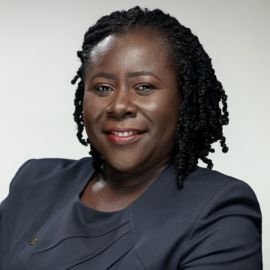
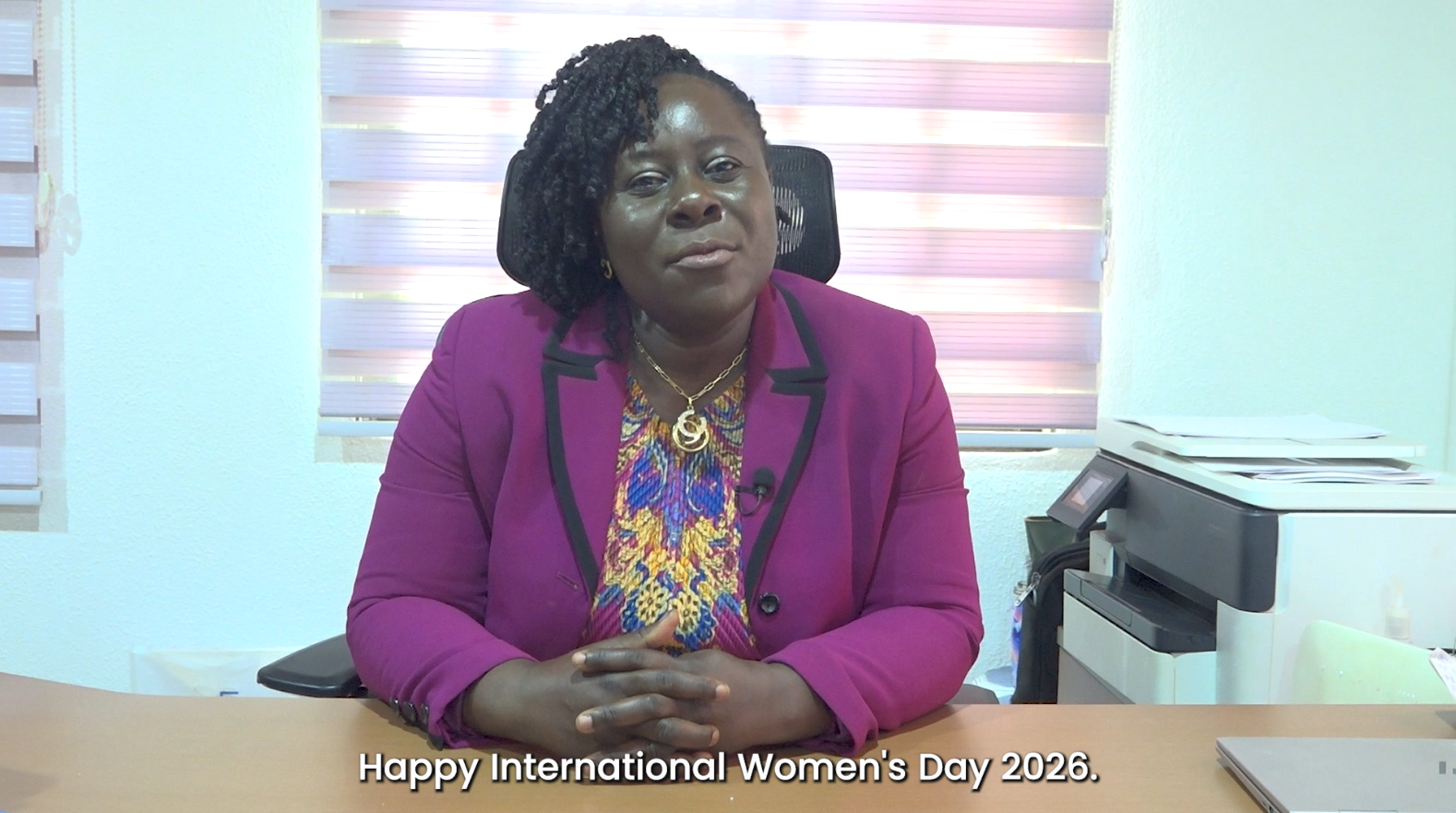
Enyonam Kpekpena, Chair of WIE

Ing. Dr. Enyonam Kpekpena is Manager of Information and Communications Technology (ICT) Projects delivery & Programme Management Office (PMO) Lead at the Electricity Company of Ghana Ltd. (ECG). She is Council Member of the Ghana Institution of Engineering (GHIE) and the founding president of ECG-WinE Chapter. She has worked in ECG for over 16 years and is currently the Manager/ IT Project Delivery and the PMO Lead and a member of the Project Management Institute (PMI), Ghana and USA.

Ing. Dr. Enyonam Kpekpena obtained her bachelor’s degree in Electrical and Electronic Engineering from the Kwame Nkrumah University of Science and Technology in 2000, where she specialized in telecommunications and computers.

She discovered her love for academia and obtained a Master of Science Degree in Management with specialization in Information Technology (IT) and Project Management from 2003 to 2004 at Colorado Technical University, USA, and followed it up with a Doctorate Degree in Management from the same university, with a concentration in Project Management from 2014 to 2017.

Her pursuit of excellence has led her to undertake certifications including Project Management Professional (PMP), IT Service Management (ITIL Foundation) Expert, and IT Security (Certified Ethical Hacker) Expert. She is Council Member of the Ghana Institution of Engineering (GHIE) and the current President of Women in Engineering (WINE), Ghana.

She is the Deputy Chair for the Women in Engineering (WIE) Committee of the Federation of African Engineering Organizations (WIE-FAEO), and the President of Women in Engineering, Ghana.

After being the Deputy Vice-Chair of the Female Retention and Leadership in Engineering theme 2 for the WFEO Committee on Women in Engineering, she was appointed Chair of the WIE Committee for the term 2024-2027.

Activities

Members

MemberWFEO National Member / InstitutionCountry / Region
Agness MofyaZimbabwe Institution of EngineersZimbabwe
Aida FrancaEngineers Chamber of MontenegroMontenegro
Aisha Mustafa UmaraNigerian Society of EngineersNigeria
Alejandro Castro JiménezCFIACosta Rica
Alexia RodriguezInstitution of Engineering SpainSpain
Anchaleeporn LothongkumCouncil of Engineers ThailandThailand
Andrea Zúñiga MonteroCFIACosta Rica
Ania LopezConsiglio Nazionale degli Ingegneri ItalyItaly
Ariana Cêa da SilvaOrdem of Engineers of AngolaAngola
Bashayer Al AwwadKuwait Society of EngineersKuwait
Bedour ShehabKuwait Society of EngineersKuwait
Belen Garcia de PablosInstitution of Engineering SpainSpain
Beverley NyakutsikwaZimbabwe Institution of EngineersZimbabwe
Carla Massunda PeneOrdem dos Engenheiros de MoçambiqueMozambique
Crisna MachavaOrdem dos Engenheiros de MoçambiqueMozambique
Dawn BonfieldInstitution of Civil Engineers UKUK
Diana LezcanoDMT Society for Teaching and EducationAssociate / Germany
Dragana BiberSerbian Chamber of EngineersSerbia
Emily TanInstitution of Engineers SingaporeSingapore
Enyonam Kpekpena (Chair)Ghana Institution of EngineersGhana
Eunice Seyaker MooreEngineering Society of LiberiaLiberia
Fadwa Abu GhaidaFederation of Arab EngineersInternational
Farai Mavhiya-BhizaZimbabwe Institution of EngineersZimbabwe
Federica Robinson-BryantInternational / INCOSEUSA
Felicia Amy Kwarma
Ankrah-Quarm
Ghana Institution of EngineersGhana
Gertrude MorganSierra Leone Institution of EngineersSierra Leone
Hanadi Al HaiKuwait Women EngineersKuwait
Hanadi AlhokairSaudi Council of EngineersSaudi Arabia
Hela KdhairiaTunisian Engineers OrderTunisia
Hessa Al HarmiSociety of Engineers – UAEUAE
Issie Yvonne GueyeFédération Nationale des Organisations d’Ingénieurs de Cote d’IvoireIvory Coast
Jeanette SouthwoodEngineers CanadaCanada
Jitu Kebede GutaEthiopian Association of Civil EngineersEthiopia
Jo WithfordEngineers AustraliaAustralia
Joan NwekeNigerian Society of EngineersNigeria
Juliet GbormittahGhana Institution of EngineersGhana
Karla Fiorella Díaz RodríguezPeruvian Engineers AssociationPeru
Kayoko YamamotoScience Council of JapanJapan
Khin Sandar TunFederation of Myanmar Engineering SocietiesMyanmar
Lensa KebedeEthiopian Association of Civil EngineersEthiopia
Lidia ZakowskaPolish Federation of Engineering AssociationsPoland
Lydie UmubyeyiInstitution of Engineers RwandaRwanda
Mandy LEUNGHong Kong Institution of Engineers
Hong Kong, SAR of China
Maria del Carmen Ponce MejíaPeruvian Engineers AssociationPeru
Maria do Ceu RodriguesOrdem dos Engenheiros TecnicosPortugal
Maria Teresa Dalenz ZapataUPADIInternational / Bolivia
Marlene KangaEngineers AustraliaAustralia
Maryam AL-ThaniSociety of Engineers- UAEUAE
Mavis Dede AlloteyGhana Institution of EngineersGhana
Mercy ManyuchiZimbabwe Institution of EngineersZimbabwe
Milene GuermontIngénieurs et Scientifiques de FranceFrance
Mr. Musaad AlsudairiSaudi Council of EngineersSaudi Arabia
Naila UmubyeyiInstitution of Engineers RwandaRwanda
Nancy GrossmanAmerican Association of Engineering SocietiesUSA
Nassirah LalooInstitute of Engineers MauritiusMauritius
Nina Drazin LovrecEuropean Council of Engineers Chambers (ECEC)Associate / Europe
Olfa YahyaouiTunisian Engineers OrderTunisia
Parvin SuleymanovaAzerbaijan Engineering AcademyAzerbaijan
Phavanee NarataruksaCouncil of Engineers ThailandThailand
Pilar RobledoInstitution of Engineering SpainSpain
Rachel BassilFederation of Lebanese EngineersLebanon
Rebecca Kumba FallahEngineering Society of LiberiaLiberia
Reine EssobmadjeInstitution of Engineers CameroonCameroon
Rose MadakiNigerian Society of EngineersNigeria
Rovani SigamoneyUNESCO RepresentativeInternational
Sally MusonyeInstitution of Engineers of KenyaKenya
Salma SadeddinGeneral Union of Palestinian EngineersPalestine
Samer MekhemarEgyptian Engineers’ SyndicateEgypt
Sangeeta WijConsulting Engineers Association IndiaIndia
Sara Fernandez CruzUnion of Engineers and Architects of Construction of CubaCuba
Shafag HuseynliAzerbaijan Engineering AcademyAzerbaijan
Sharon MusondaEngineering Institution of ZambiaZambia
Solanga RwasamanziInstitution of Engineers RwandaRwanda
Surekha DeshmukhIEEEAssociate / International
Sylvie VillaSwiss National Committee for Engineers EuropeSwitzerland
Tatjana SimonovicSerbian Chamber of EngineersSerbia
Valerie AgberagbaNigerian Society of EngineersNigeria
Vera SheillaOrdem of Engineers of AngolaAngola
Wai Yie Leong (Deputy Chair)Institution of Engineers MalaysiaMalaysia
Wen-Jean HsuehChinese Institute of Engineers, Chinese TaipeiChinese Taipei
Xiaoru WangChina Association for Science and TechnologyChina
YAN JinxiuChina Association for Science and TechnologyChina
Yvette Ramos-AivazianSwiss EngineeringSwitzerland