Committee on Disaster Risk Management (CDRM)
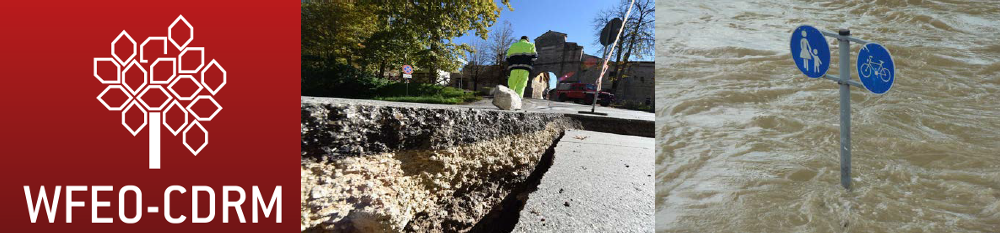
In transit to the “new normal conditions”, the CDRM is called to lead a profound and global analysis on our previous misunderstanding on the enormous destructive power of pandemics, the need for improved risk scenarios, early warning, and education to recommend prompt, effective and agreed measures, customized to each society to build resilience and avoid future global disasters.
Federico Ferrario and Erika Prina Howald, Chairs of CDRM / disaster-risk-management(at)wfeo.org
The WFEO-CDRM 2025-2029 will be hosted by the Swiss National Committee WFEO-ENGINEERS EUROPE, of which the Swiss Society of Engineers and Architects (SIA) in Zurich, Switzerland is a member. The SIA will be responsible for managing the CDRM.
Background
The Committee on Disaster Risk Management (CDRM) was established at the WFEO General Assembly held in December 2009, Kuwait, having as role minimizing the potential damage and risk to human life and damage through the proper application of technology.
Science Council of Japan (SCJ) and the Japan Federation of Engineering Societies (JFES) served as host of the Committee on Disaster Risk Management (CDRM), for an eight-year term from 2009 to 2017. The CDRM was formally transferred from Japan to Peru during the WFEO General Assembly, in December 2017. The Peruvian Engineers Association (CIP) served as host of the CDRM from 2018 to 2025.
Strategic Objectives
The WFEO-CDRM shall support the WFEO and the engineering profession worldwide by:
- Support through engineering, the implementation of the global initiative: Sendai Framework for Disaster Risk Reduction 2015-2030, four priority areas:
- Understanding disaster risk;
- Strengthening disaster risk governance to manage disaster risk;
- Investing in disaster risk reduction for resilience;
- Enhancing disaster preparedness for effective response and to “Build Back Better” in recovery, rehabilitation and reconstruction.
- Promote and assist in the achievement of the 2015-2030 U.N. Sustainable Development Goals, with primary focus on the following goals:
- Goal 11 – Sustainable cities and communities: Make cities and human settlements inclusive, safe, resilient and sustainable.
- Goal 13 – Climate Action: Take urgent action to combat climate change and its impacts.
- Goal 15 – Life on Land: Protect, restore and promote sustainable use of terrestrial ecosystems, sustainably manage forests, combat desertification, and halt and reverse land degradation and halt biodiversity loss.
- Strengthen the committee’s visibility and presence in the public sector, academic institutions, and multilateral organizations.
- Contribute to build the knowledge of disaster risk management practices for engineers and community leaders to increase resilience.
Strategic Actions
The strategic objectives will be reached through the following strategic actions. These actions will have global, regional or national scope. They will be organized within the five CDRM specialized working groups.
- Organize webinars, workshops and round tables to analyse specific issues of the DRM and reach clear outcomes;
- Publish the results, conclusions and recommendations of the activities mentioned above, as outreach material intended to policy makers, community leaders and academic institutions.
WFEO Vision
To be the acknowledged global leader of the engineering profession.
WFEO Mission
To be the unified voice of the engineering profession in providing strategic engineering guidance to global society for sustainable development.
CDRM Vision
To be an international organization to increase the resilience of cities and communities through engineering.
CDRM mission
To promote the culture of resilience and reduce disaster risk through the dissemination of knowledge and engaging in best engineering practices.
WFEO-CDRM 2025-2029
- Ensure and support the active participation of CDRM members in relevant policy and technical forums and committees to provide advice in their field of expertise;
- Organize and execute 6-8 Webinars annually on different DRM topics;
- Publish any publications and an annually activity report.
These actions require some support processes, namely:
- Strengthen communication links with relevant stakeholders to develop cooperative activities on DRM for sustainable development;
- Encourage and support CDRM vice-chairs to organize webinars, technical-scientific events, and publications related to their working groups;
- Encourage the WFEO national members to be part of this committee.
Federico Ferrario, Co-Chair of CDRM
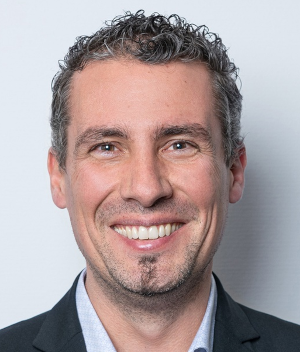
Federico has an MSc. in forest engineering and hydraulic engineering of the Federal Institutes of Technology in Zurich and Lausanne.
Director and Chairman of the Board of the engineering firm EcoEng SA, Federico currently works as a project manager in the fields of natural hazards, hydrology and hydraulics, risk management, and environmental consulting.
He is also a firefighter officer at the local city fire brigade and a Swiss federal firefighting instructor with various specialisations.
He is an active member of the CDRM since June 2022 and speaker of the webinar “Disaster Risk Reduction in Switzerland – Strategy and Management” given on 25 April 2025.
Federico is currently vice-president of the SIA.
Erika Prina Howald, Co-Chair of CDRM
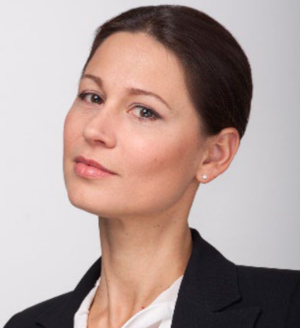
Erika Prina Howald has been Professor of geotechnics and natural hazards at the INSIT Research Institute of the School of Engineering and Management Vaud, within the University of Applied Sciences of Western Switzerland (HES-SO) since 2007.
Her research topics mainly concern risk management and mitigation of natural hazards, with particular attention to hazard zoning, vulnerability of structures and infrastructure, and finally protection measures for a safe and sustainable interaction between human activities and environment.
In addition, her laboratory work focuses on the influence of climate change on the geomechanical parameters of permafrost and the deformation of rock glaciers.
Activities
WFEO-CDRM webinar “From scenario selection to vulnerability and recovery models of coastal infrastructure systems” (In Spanish)
Members
Members list
| Member | WFEO National Member / Institution | Country / Region |
| Aaron BOK | Hong Kong Institution of Engineers | Hong Kong, SAR of China |
| Abiy Feredenigus | Ethiopian Association of Civil Engineer | Ethiopia |
| Ahmad H. Bahman | Kuwait Society of Engineers | Kuwait |
| Aleksandar Seizovic | Serbian Chamber of Engineers | Serbia |
| Andreas Brandner | European Council of Civil Engineers (ECCE) | International |
| Aris Chatzidakis | World Council of Civil Engineers (WCCE) | International |
| Arturo Muiña Dominguez | Instituto de la Ingeniería de España | Spain |
| Carlien Bou Chedid | Ghana Institution of Engineers | Ghana |
| Christian Ayala | Peruvian Engineers Association | Peru |
| Colin Sheldon | Engineers Australia | Australia |
| David Brunsdon | Engineering New Zealand | New Zealand |
| Denghua YAN | China Association for Science and Technology | China |
| Erika Prina Howald (co Chair) | Swiss National Committee WFEO-ENGINEERS EUROPE | Switzerland |
| Fang Chen | China Association for Science and Technology | China |
| Federico Ferrario (Chair) | Swiss National Committee for ENGINEERS EUROPE-WFEO | Switzerland |
| Fernando Rodriguez | International Association of Engineers and Architects (IAEA) | Associate / Spain |
| Hasan Damaj | Federation of Lebanese Engineers | Lebanon |
| Houssine Bacouche | Tunisian Engineers Order | Tunisia |
| Hussain Seraj | Jordan Engineers Association | Jordan |
| James Daniell | Global Facility for Disaster Reduction & Recovery | Expert / World Bank |
| José Cabeçadas | Ordem dos Engenheiros Portugal | Portugal |
| José Daima Nkaloco | Ordem dos Engenheiros de Moçambique | Mozambique |
| José Macharé | Peruvian Engineers Association | Peru |
| José Manuel Brazao Andrade da Silva Branco | Ordem dos Engenheiros | Portugal |
| José Rodrigues Matola | Ordem dos Engenheiros de Moçambique | Mozambique |
| Jose Sumbula | Ordem of Engineers of Angola | Angola |
| Karel Vancura | The Czech Association of Scientific and Technical Societies | Czech Republic |
| Kenichi Tsukahara | Science Council of Japan | Japan |
| Lana Todorovic | Engineers Chamber of Montenegro | Montenegro |
| Lei Wang | Intl. Res. Center of Big Date for SDGs | Expert / China |
| Marcial Rivera Rodríguez | Colegio Federado de Ingenieros y de Arquitectos de Costa Rica | Costa Rica |
| Marlene Kanga | Engineers Australia | Australia |
| Milorad Miladinovic | Serbian Chamber of Engineers | Serbia |
| Mohammad Almutiri | Saudi Council of Engineers | Saudi Arabia |
| Mohammad T. Alhaidhal | Saudi Council of Engineers | Saudi Arabia |
| Navin Vasoya | Institution of Engineers, India | India |
| Nina Drazin Lovrec | European Council of Engineers Chambers (ECEC) | Associate / Europe |
| Nor Hisham | Institution of Engineers, Malaysia | Malaysia |
| Nurudeen Musa Muhammad | Nigerian Society of Engineers | Nigeria |
| Paulo Gil Martins | Ordem dos Engenheiros Portugal | Portugal |
| Platonas Stylianou | European Council of Civil Engineers (ECCE) | International |
| Refilwe Buthelezi | Engineering Council of South Africa | South Africa |
| Rodrigo Cama | Ordem of Engineers of Angola | Angola |
| Soichiro Yasukawa | UNESCO | Expert / International |
| Souley Harouna | Ordre des Ing. G. Civil Niger | Niger |
| Stefan Schauer | Austrian Institute of Technology | Expert / Austria |
| Tang Un Fong (Timothy) | Macau Institute Of Engineers (AEM) | Macau, SAR of China |
| Ting-Chi TSAO | Chinese Institute of Engineers | Chinese Taipei |
| U Ko Ko Gyi | Myanmar Engineering Society | Myanmar |
| Valentina Putrino | Institution of Civil Engineers | UK |
| Valentino Michira | Institution of Engineers of Kenya | Kenya |
| Vasilios Bardakis | Technical Chamber of Greece | Greece |
| Vitor Reis | Ordem dos Engenheiros Portugal | Portugal |
| Viviana Novelli | Cardiff University | Expert / UK |
| Walid Ben Ayed | Tunisian Engineers Order | Tunisia |
| Wilmer Saavedra | Peruvian Engineers Association | Peru |
| Wu Chou Kit (Eddie) | Macau Institute Of Engineers (AEM) | Macau, SAR of China |
| Xu Tang | IRDR (RIG-WECEIPHE) at Fudan University | Expert / China |